
Wood vs. Composite Decking: The Complete Homeowner’s Guide to Making the Right Choice
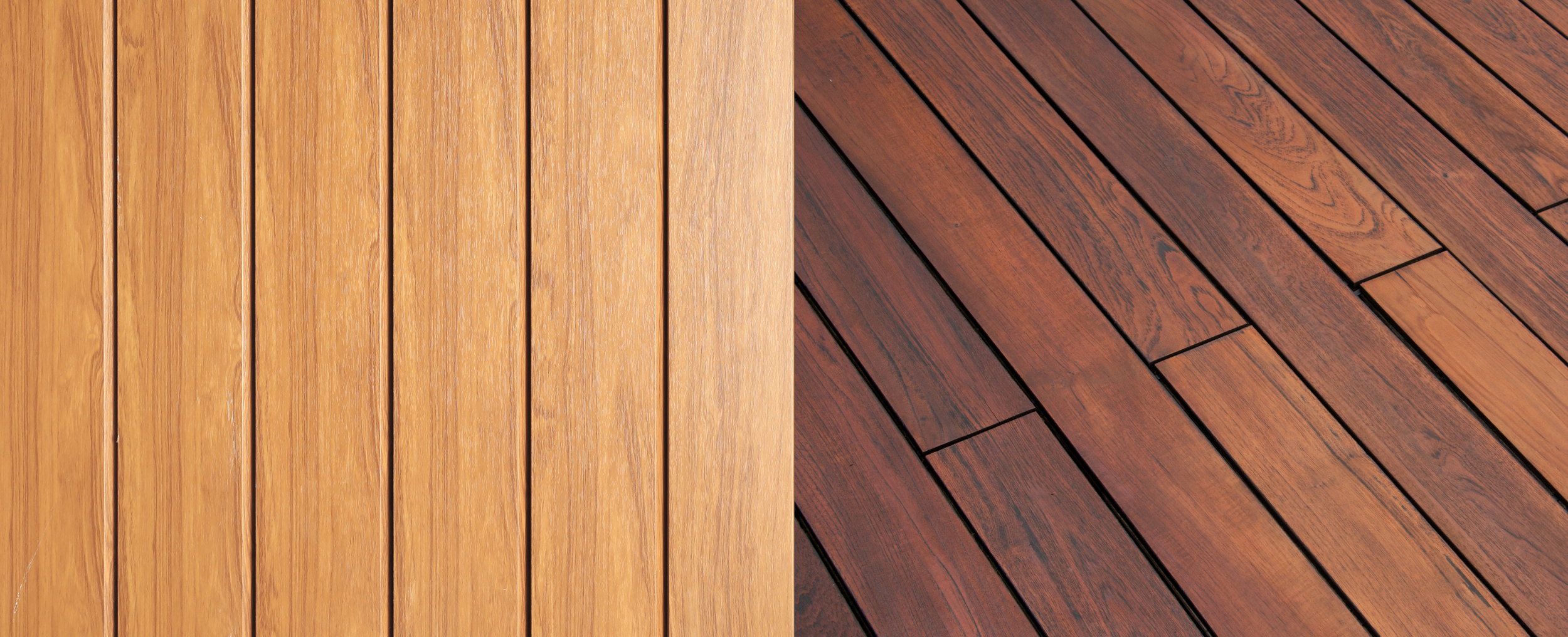
If you are standing on an aging wood deck—staring at peeling stain, raised splinters, or soft spots—you are likely weighing your options for a rebuild or replacement. The biggest question almost every homeowner faces comes down to one fundamental decision: Should you build with traditional wood or upgrade to composite/PVC decking?
At first glance, wood looks attractive for its low upfront price tag, while composite promises freedom from maintenance. But once you pull back the curtain on long-term costs, technical installation rules, and structural framing requirements, the decision becomes much clearer.
Here is the complete, honest breakdown of how wood and composite truly compare, how to avoid costly construction mistakes, and how to choose the best option for your home.
1. Upfront Cost vs. Long-Term Value
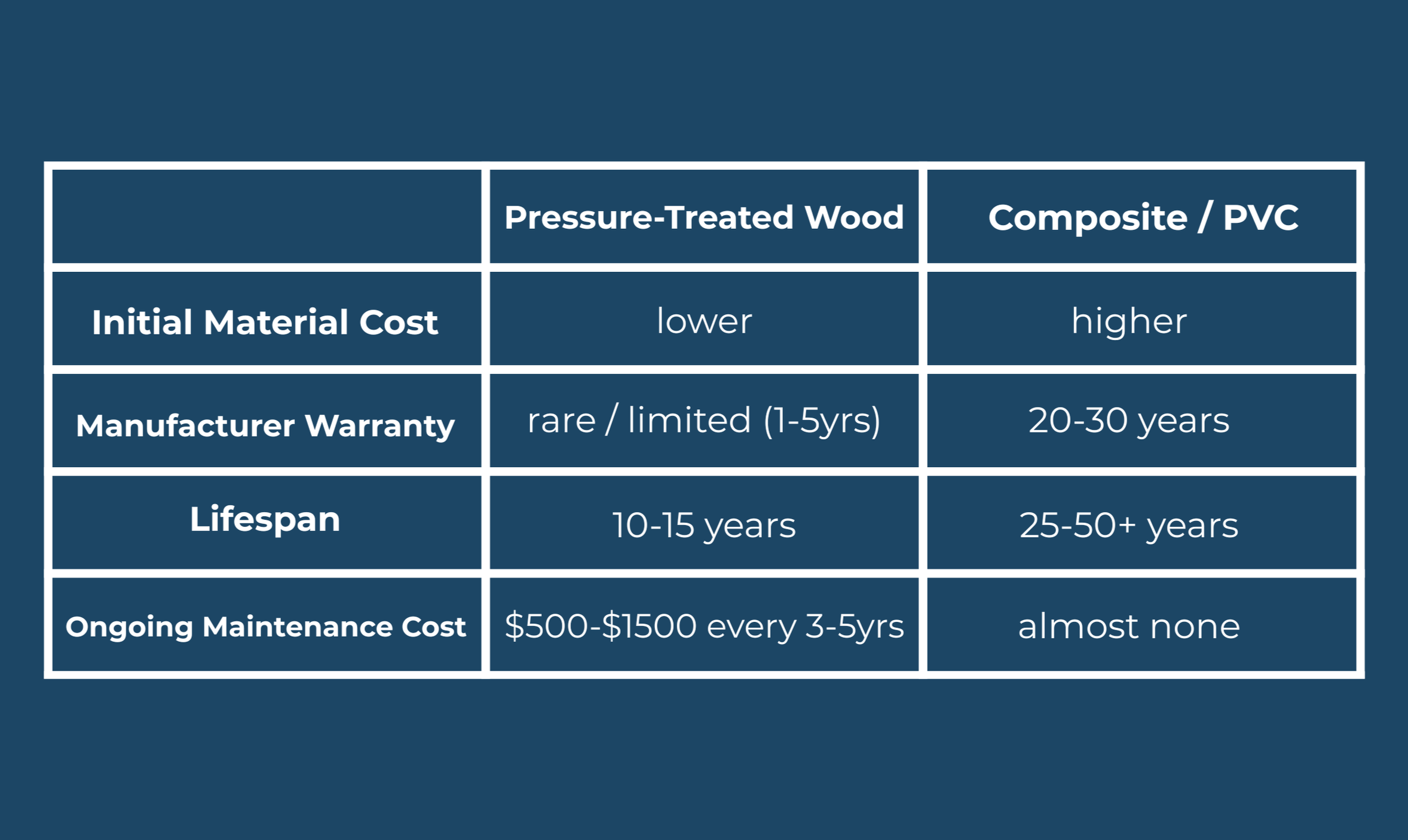
The immediate price tag is usually where the debate begins. Composite decking carries a higher upfront material cost than standard pressure-treated lumber, but looking only at the initial estimate is a common trap.
The "Hidden Tax" of Wood
Wood decking is not a one-time purchase; it is a recurring maintenance bill. Over a 10- to 15-year period, the money spent on cleaners, sander rentals, primer, paint, and high-end exterior stains quickly bridges the price gap between wood and composite.
When you factor in the labor hours spent maintaining a wood deck every few seasons, composite decking effectively pays for itself over its lifespan.
2. The Maintenance Reality: Stripping, Sanding, and Sealing

The primary reason homeowners choose composite or PVC decking comes down to lifestyle. A deck should be an outdoor living space for relaxation—not a recurring home-improvement chore.
What Wood Maintenance Really Takes
Keeping a real wood deck structurally sound and visually appealing requires a relentless maintenance cycle every 5 to 10 years (or even more frequently in harsh climates):
Chemical Stripping: Removing old, cracked, or flaking stain.
Pressure Washing & Sanding: Smoothing down splintered edges and raised wood grain.
Restaining or Repainting: Applying fresh protective layers under clear skies.
Crucial Technical Detail: The Painting Pitfall
If you choose to paint a wood deck instead of staining it, both sides of every single board must be sealed before installation. If a painter or builder only coats the top surface, moisture gets absorbed into the unpainted underside. Trapped moisture combined with restricted airflow causes the wood to warp, cup, and push the paint off from below within just a few seasons.
The Low-Maintenance Composite Alternative
Composite and PVC materials do not absorb moisture, splinter, or rot. They require no sanding, staining, or painting ever. Maintenance generally consists of a quick wash with mild dish soap, water, and a soft-bristle brush once or twice a year to clear away dirt or pine needles.
3. Critical Structural Differences: Framing for Composite

Composite boards are engineered products. They do not behave like solid natural lumber, which means a composite deck cannot be framed or installed the exact same way as a traditional wood deck.
Thermal Expansion and Contraction
Composite and PVC expand and contract along their length as outside temperatures fluctuate far more than wood does. Because of this movement, proper perimeter installation and precise gap spacing are essential to prevent boards from buckling or pushing against house siding.
Picture-Frame Borders vs. Staggered Joints
Avoid Staggered Joints: In traditional wood flooring or older deck builds, installers often "stagger" board ends across joists. On a composite deck, staggering boards creates weak points, leaves unsightly cut edges exposed to debris, and lacks sufficient joist support where board ends meet.
The Picture-Frame Solution: A professional build utilizes a picture-frame border, often accompanied by a center breaker board. This frames the perimeter cleanly, accommodates thermal expansion, hides board ends, and provides a polished, high-end appearance.
Non-Negotiable Internal Blocking
You cannot simply lay picture-frame borders down on standard 16-inch center joists.
To support perimeter border boards and breaker boards, your builder must install extra internal blocking framed directly into the substructure.
Without dedicated blocking, the edges of your border boards will overhang empty space without solid wood underneath, causing the deck edges to sag, twist, or feel soft underfoot.
If you are deciding between building the deck yourself vs hiring a professional, click here for the cost comparison, construction complexity and insider tips!
4. The #1 Contractor Red Flag: How to Screen Your Builder
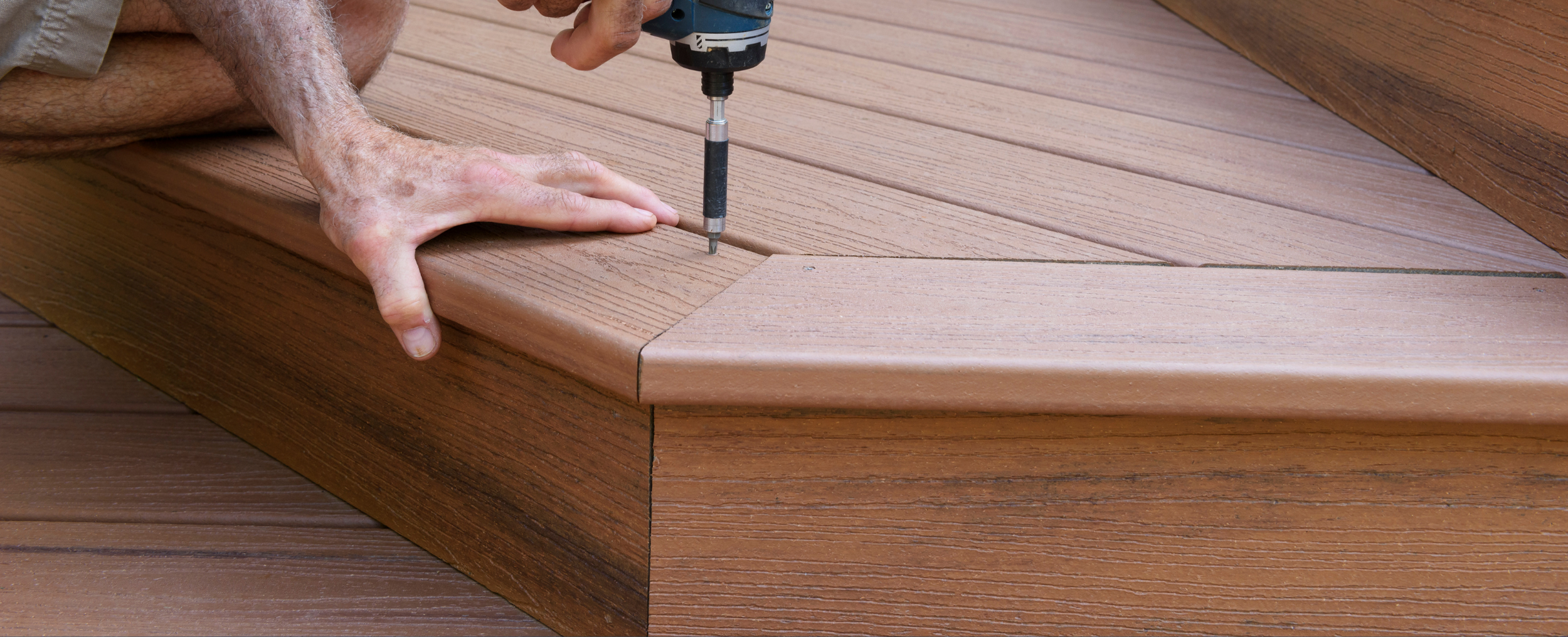
Because composite requires specialized framing techniques, hiring the wrong contractor can ruin high-grade materials. Before you sign a contract or pay a deposit for a composite deck build, ask the builder this specific question:
"Do you layout composite boards using the picture-frame method with extra blocking, or do you stagger the decking boards?"
The Red Flag: If a contractor says they plan to stagger composite boards like traditional wood, or if they claim extra blocking isn't necessary for borders, do not hire them.
A builder who staggers composite boards is treating engineered decking like standard dimensional lumber. This is a clear indicator that they lack experience with proper composite framing requirements, which will lead to structural sagging and voided manufacturer warranties down the road.
If you want more advice on what to look for when hiring a deck builder, click here for our complete guide on how to hire a deck builder!
Final Verdict: Which Material Should You Choose?

The real-world feedback from homeowners is almost always the same: those who invest in composite decking are consistently happier with the long-term outcome. They get to enjoy an outdoor space that looks brand new year after year without wasting summer weekends on deck maintenance.
Choose Wood If: Upfront construction budget is your single hard constraint, or you are comfortable committing to routine sanding, staining, and sealing every few years.
Choose Composite/PVC If: You want maximum longevity, strong warranty coverage, high curb appeal, and a deck that requires virtually zero maintenance.
If budget forces your hand, wood will serve your home well—provided it is properly sealed on all sides and regularly maintained. But if you have the flexibility, investing in composite or PVC decking is the smartest choice for long-term value and peace of mind.
Thinking of building a new deck in the Spokane area? Schedule a consult here to get your free estimate!
